Learn / Local Service Side Hustles: Cleaning, Detailing, Lawn Care
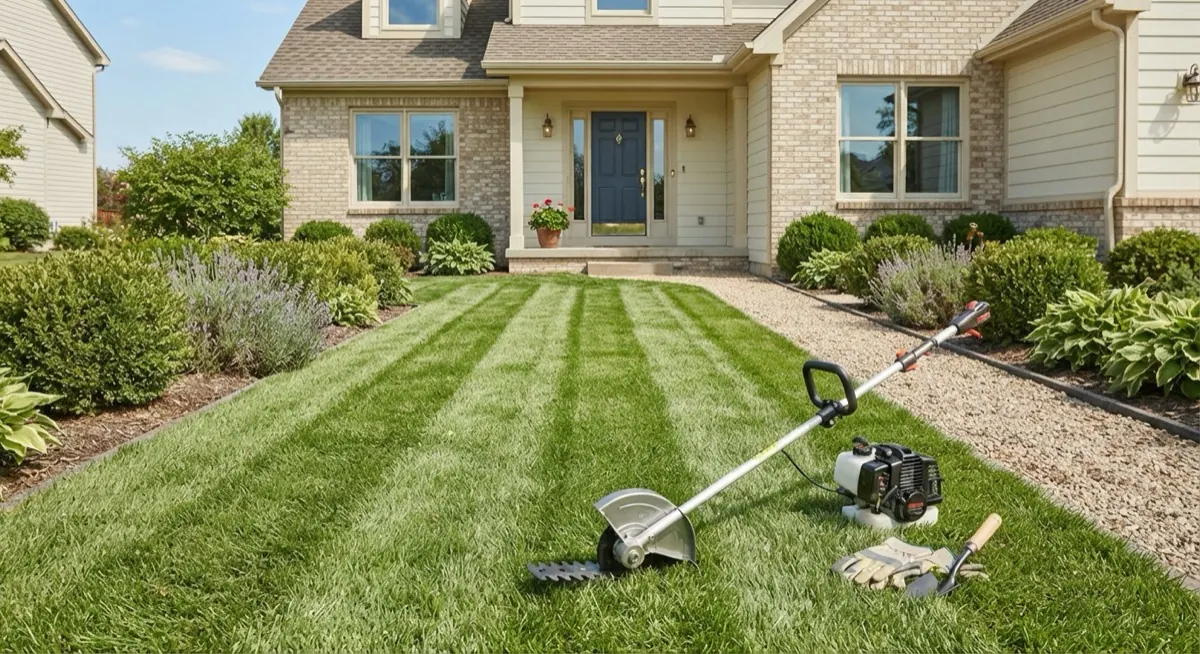
How to Start a Lawn Care Business: Do the Season Math First
Start a lawn care business: 2026 mowing prices, a season sheet, weekly and annual math by region, spraying license notes, and three moves to client one.
Yes, a solo mowing business is one of the faster low-capital local starts: simple work, clients who repeat weekly, gear that fits in a truck bed. But lawn care doesn't pay you for 52 weeks. It pays for the weeks grass grows. LawnStarter's 2026 data puts the typical mowing season at about 24 weeks in the Northeast and about 45 in the Southeast. Same business, nearly twice the paid weeks. This guide gives you the season math, a price list, a lean kit, and three moves to land client one.
Late October, somewhere up north. The phone stops ringing. The mower sits in the garage. The insurance bill still arrives. That month is the business. This guide is about making the year pay, not just June.
The bottleneck: the season, not the cut
In lawn care, the hard part is the growth calendar in your town and the gap it leaves.
Beginners fail on the calendar, not the cutting. You can learn to mow a straight line in a weekend. What takes a season to learn is that a route priced for June starves in January, and that the two numbers that decide this business aren't your price per cut and your minutes per lawn. They're your season length and your winter plan. Every decision below answers to the season.
One rule to carry through: a lawn care business isn't a weekly income. It's an annual income with a hole in it.
The Season Sheet
The Season Sheet is a one-page plan for one year: one line per month, filled in for your town before you buy anything. Each line holds cuts per client that month, the service mix, price per visit, number of clients, revenue, and hours.
An example sheet for a 15-client route at $50 a cut (example numbers, cool-season town):
- January, February, December: 0 cuts. Revenue $0, unless you sell a winter service.
- March: 2 cuts plus spring cleanups. Mowing revenue 15 × 2 × $50 = $1,500.
- April through October: about 4 cuts a month. Mowing revenue 15 × 4 × $50 = $3,000 a month, plus aeration and leaf cleanup in the fall.
- November: 2 cuts plus leaf cleanup. Mowing revenue $1,500.
Then the bottom lines, which are the whole device:
- Annual revenue: every month added up, mowing plus seasonal work.
- Annual hours: cutting plus drive plus seasonal jobs.
- Annual rate: (annual revenue − annual costs) ÷ annual hours.
- The winter-gap line: the months with no mowing revenue, and what covers them: a cash reserve, a winter service, or another income. The rule: the gap is covered on paper before you start, never by hoping the phone rings in January.
Two facts make the sheet honest. First, season length is local. LawnStarter's regional figures put the typical season at about 24 weeks in the Northeast, 26 in the Midwest, 34 in the West and Northwest, 45 in the Southeast, and 46 in the Southwest. Fill yours in from your own street: when did lawns start needing weekly cuts this year, and when did they stop? Second, grass type shapes the months inside the season. Warm-season grasses grow hardest in summer; cool-season grasses surge in spring and fall. Your cuts-per-month line should follow your grass, not a flat four every month.
What you sell: a weekly cut, then a seasonal program
Build on weekly mowing on a route you already drive: mow, edge, blow the clippings off the concrete. Weekly cuts keep each mow light and keep the route predictable.
Published 2026 mowing prices, so you can see where yours needs to live:
- Typical visit: $44 to $71, average $57 (LawnStarter, updated November 4, 2026).
- By lawn size (LawnStarter): up to a quarter acre $41 to $61; a quarter to a half acre $49 to $69; a half acre to one acre $59 to $114.
- Hourly: $32 to $68, or $0.01 to $0.06 per square foot (LawnStarter).
- Minimum: lawns under 5,000 square feet usually carry a minimum around $30 (LawnStarter), because travel and setup happen whether the lawn takes 15 minutes or 45.
- Platform view: $30 to $85 a visit, average about $50 (GreenPal).
Your town moves these more than any national number does. Call three local operators, ask their weekly price for a quarter-acre lawn, and you have your market in an afternoon.
The seasonal program is what turns a mowing route into a lawn care business, and it's sold when mowing slows:
- Spring cleanup: debris, sticks, winter damage, first cut. Price it as a project, not a mow.
- Core aeration: usually once a year. LawnStarter's aeration guide puts a typical yard at $107 to $202. Rent the aerator for your first aeration weekend; buy one only when the weekends are already booked.
- Leaf cleanup: a fall project. Price it locally, by tree cover, not lawn size.
- Fertilizer and weed control: see the licensing section first. Spraying is a different business from mowing.
Walk every lawn before you price it. Size, slope, gates, trees, beds, and grass height move the time, and time is the price. A gate narrower than your mower deck means push-mowing the back by hand. Overgrown lawns are a separate charge: LawnStarter notes most companies add a long-grass fee once grass passes about 6 to 12 inches. Quote the overgrowth separately, or the first cut eats the profit of the next three.
Monthly billing is really a season decision. Some operators bill a flat monthly amount all year, the annual program total spread evenly, so they get paid through winter. It's the cleanest winter bridge in the business, but only with a written contract that states the annual total. A monthly rate with no written annual total is a dispute waiting for December.
The math: one Saturday route, two seasons, same work
Every input is named so you can rerun it. A solo operator with a built route (not week one) of 15 weekly lawns in one neighborhood.
Named inputs:
- Price per cut: $50 (example; inside LawnStarter's $44 to $71 and GreenPal's $30 to $85).
- Time per lawn: 30 minutes all-in, mow, edge, blow (example; time your own).
- Weekly revenue: 15 × $50 = $750.
- Cutting time: 15 × 0.5 = 7.5 hours.
- Drive: 30 miles, 1 hour (example; one neighborhood, about 30 mph).
- Mileage: 30 × $0.76 = $22.80, the IRS business rate for miles driven July 1 to December 31, 2026 (Journal of Accountancy). It stands in for truck costs, not just gas.
- Fuel and blades: $30 a week (example).
- Equipment reserve: $15 a week (example; belts, oil, plugs, filters, and a fund toward the next mower).
- Insurance: $57 a month, Insureon's average general liability premium for lawn care ($1 million per occurrence, updated September 28, 2026). This example uses $57 × 12 = $684 a year. Get your own quote.
The in-season week:
- Costs: $22.80 + $30 + $15 = $67.80.
- Net: $750 − $67.80 = $682.20.
- Hours: 7.5 + 1 = 8.5.
- Rate: $682.20 ÷ 8.5 = about $80.26 an hour, gross, before taxes.
That hourly number is real, and it's the trap. Watch the season.
Run A, a 45-week season (LawnStarter's Southeast figure):
- Route net: 45 × $682.20 = $30,699.
- Insurance for the year: $684 (it bills all twelve months).
- Annual net: $30,015, over 382.5 hours.
- Winter gap: 7 weeks with no mowing revenue.
Run B, a 24-week season (LawnStarter's Northeast figure), same route, same price:
- Route net: 24 × $682.20 = $16,373.
- Insurance: $684.
- Annual net: $15,689, over 204 hours.
- Winter gap: 28 weeks with no mowing revenue.
Same work, same price, same operator. The season alone moves this example year by $14,326. And both runs assume every week gets worked: no rain weeks, no breakdown weeks, no sick weeks. Real years come in under both.
That's the myth worth busting: "lawn care pays $80 an hour." In season, in this example, it does. Across the year, the same route pays very different amounts depending on where you live, before taxes, before rain, before the mower breaks. Anyone quoting an hourly rate for lawn care without naming the season is selling you June and hiding January. To see how long your winter gap can last on your savings, run it through the Runway and Risk Calculator.
The starter kit: buy for the route you have
Startup costs range widely because guides count different businesses: a weekend route with a used push mower isn't a full-time crew with a zero-turn and trailer. For a solo start with a vehicle you already own, price each line locally, used where it makes sense:
- A self-propelled mower to start; a commercial walk-behind once the route justifies it (check it fits through your clients' gates).
- A string trimmer.
- A blower.
- An edger, rakes, gloves, and eye and ear protection.
- Gas cans, oil, and spare blades.
Skip in month one: a zero-turn, a trailer, an aerator (rent it), and any sprayer.
One kit rule is specific to lawn care: a backup plan is the business. A mower that won't start on a Saturday with 15 lawns booked isn't a bad day. It's a lost week of recurring revenue and 15 clients who might call someone else. The backup can be a second used mower, a rental shop that opens early, or a nearby operator who'll cover your route. "Hope it starts" isn't a plan. That's what the reserve line in the math is for.
Licensing, insurance, and taxes: check your state and local rules
Mowing usually needs a general business registration from your city, county, or state, not a special trade license, but rules vary, and some states license larger landscaping projects. Check your state and local rules before you quote a big job. This isn't legal advice.
Spraying is different, and it's where beginners get hurt. Applying weed killer or insect control to someone else's lawn for pay is commonly a licensed activity. North Carolina, for example, requires anyone applying pesticides for compensation to hold a commercial pesticide applicator license, per NC State Extension. Some states also regulate fertilizer application. Before you spray or spread anything for a fee, check your state agriculture department's rules. The safe first year is mow-only until you hold the credential.
Insurance: general liability covers damage your work causes. Insureon's lawn care average is the planning number in the math above; your quote replaces it. Your truck, trailer, and mowers need their own coverage lines, so quote the bundle, not just liability. When you hire, workers' comp and payroll rules come in; check your state first, and ask a local professional about employee versus contractor.
Taxes: set money aside from every payment in a separate account, and ask a tax professional how much and how to pay it. The habit matters more than any number here.
How to land client one: three moves, in order
Move one: ten neighbors, one specific offer. Post in your own neighborhood (Nextdoor, a community board, a group chat): weekly mowing at a named price for a standard lawn, first cut at the same price, your route day named. "Saturdays in Oakdale, eight slots." Take only lawns on streets you already cut. A client three towns over stretches the route and breaks the Saturday math. Density is a pricing decision.
Move two: one marketplace profile, used carefully. Lawn care marketplaces put you in front of people already looking, but they cost margin through a platform cut, lead fees, or bid-down prices. Track your cost per booked client from the first lead. If a channel costs more than referrals, it's the wrong channel for a starter route.
Move three: ask for the referral at the gate, while the client is looking at a fresh cut. Offer a discount on the next cut for a neighbor who books, and write it on the invoice. One referred client on the same street is worth three across town.
No ads and no website before you have clients. A first-cut discount is fine. A permanently low price fills your route with the clients who haggle hardest and cancel most, and a cancelled weekly client leaves a hole that takes weeks to refill.
Friction: what lawn care does to you
Weather owns the calendar. Wet grass clumps, clogs the deck, ruts soft ground, and leaves a worse finish than no cut. A rain week is a $0 week on per-visit billing, then every lawn is overgrown at once. Drought does the opposite: growth stops and per-visit clients ask to skip, while a monthly-billing client keeps paying. Heat owns the operator: hydration, sun protection, and a hard stop in extreme heat aren't optional.
Breakdowns are the second calendar. Blades dull, belts snap, plugs foul, filters clog. Winterize before winter: stabilize or drain fuel, change oil, sharpen blades, clean the deck. A mower stored dirty in November won't start in March.
Property damage. Mowers throw debris. Sprinkler heads hide in tall grass. Dog waste, toys, stumps, and landscape lighting live where the blade goes. Walk the lawn on the first visit, note the hazards, and take an arrival photo with the client's permission.
Gates, dogs, and access. A locked gate is a skipped lawn. A loose dog is a safety and liability problem. Text clients the evening before route day to confirm the gate code, the dog inside, and the cars moved.
Chemicals. Drift carries weed killer onto a neighbor's garden or a pet. The wrong product burns a lawn, and it grows out over weeks in full view. If a client asks you to "just spray something," refer them to a licensed applicator.
Growth surges. After a rainy week, everyone wants to be first. Cut weekly clients first, in route order, and charge the long-grass fee for overgrowth instead of absorbing it.
Who should wait
Wait if you don't have reliable transport and somewhere to store a mower. Wait if hours of physical work in summer heat is a problem. And wait if you need full-time income next month in a short-season town with no winter plan. That's not a reason never to start. It's a reason to start in early spring with the Season Sheet filled in.
The test: one sheet, ten lawns, three clients
Don't buy a zero-turn and don't print a fertilizer menu. Run this, in order:
- Fill in one Season Sheet for your town with your real season length and your real winter-gap cover, named in writing.
- Walk and price ten lawns in one neighborhood, writing down the price and time estimate for each.
- Contact ten neighbors with the specific offer.
- Book three weekly clients on one street, cut them for four straight weeks, and fill in the sheet with real times, drive, and costs.
If it fails, read the symptom:
- No replies: the offer or the area is wrong. Name a smaller zone and shorten the offer.
- Walked lawns but no bookings: a price or trust gap. Compare against your three local prices, and say in your message that you're insured.
- Bookings but a Saturday rate below your floor: reprice or re-route. Raise the price on the next quote, move the far lawn to another day, or both. Never fix it by scalping lawns to go faster.
- A breakdown kills a route day: that's the backup plan failing. Fix it before the next route day.
Pass the test and you have a season, a price, and a route. Then add streets one at a time with the same sheet.
Comparing local services? The Local Service Side Hustles hub puts lawn care next to starting a cleaning business and starting a car detailing business.
Your next step: set your per-cut price in the Side Hustle Pricing Calculator using your walked-lawn times, then send the ten neighbor messages.